I sat in a Rioja seminar last week and walked out feeling like I’d been away from the region for a decade, not a couple of years. Village names on labels. A whole tier of single-vineyard wines I’d never priced out. Sparkling Rioja poured as though it were unremarkable. I’ve built wine programs around Rioja for years — Crianza, Reserva, Gran Reserva, done — and I still had to go home and read the actual pliego de condiciones, the Consejo Regulador’s governing rulebook, to sort what changed from what I’d simply misremembered.
I don’t think I’m the only buyer walking around with a Rioja mental model that’s eight years stale. The region restructured how it tells you where a wine is from, and it quietly opened the door to a style (sparkling) that most of the trade still thinks doesn’t exist. Here’s what actually happened, in order, and what it means for anyone building a list.
The 2017 reform: geography got its own axis
For most of Rioja’s modern history, the only classification that mattered was how long a wine aged: Joven, Crianza, Reserva, Gran Reserva. That system never told you where in Rioja’s roughly 66,000 hectares the grapes actually grew. A Gran Reserva could come from a valley-floor cooperative parcel or a 600-meter limestone hillside, and the label wouldn’t say which.
The Consejo Regulador’s governing board voted to fix that on 7 June 2017, creating the Viñedo Singular framework and the new Vino Espumoso de Calidad category, with Vino de Zona and Vino de Municipio following in a separate Pleno vote that August; all four were formally registered with the EU on 15 February 2018 under amendment AM05, the date the reform became enforceable law.1
- Viñedos Singulares — single-vineyard wines from a specific, named, delimited plot, vines at least 35 years old, hand-harvested, lower-yielding than standard Rioja, and required to pass a dedicated tasting panel every vintage to keep the designation.
- Vino de Zona — wines that must come 100% from one of Rioja’s three sub-zones: Rioja Alta, Rioja Alavesa, or the newly renamed Rioja Oriental.
- Vino de Municipio — the original village-wine mention (later split into two mentions in 2024 — see below).
- Vino Espumoso de Calidad — a formal legal category for quality sparkling Rioja, made by the traditional method.
A separate Consejo Regulador vote in April 2018 formalized the rename of Rioja Baja to Rioja Oriental, pushed by producers including Álvaro Palacios and Telmo Rodríguez, who argued “Baja” (Lower) read as a value judgment hurting the zone’s reputation, when in fact it includes some of the region’s coldest, highest-elevation sites.2
Worth being precise about what this reform didn’t do, because it’s where I got tripped up in the seminar room: it did not touch the list of grapes Rioja is allowed to use. More below, because it’s the most common misunderstanding in the room.
2024: one village-wine mention becomes two
The next legal change came on 15 February 2024, when the Consejo Pleno split the old “Vino de Municipio” mention into two front-label declarations, enacted into Spanish law 27 June 2024 and registered with the EU as amendment AM12 on 4 July 2024.3 The distinction matters for how you read a bottle:
- “Vino de [village]” means the grapes came exclusively from that municipality and the wine was made, aged, and bottled there too.
- “Viñedo en [village]” means the grapes came exclusively from that municipality, but the winery itself can sit anywhere else within DOCa Rioja.
Both mentions now carry a dedicated back-label seal reading “Vino de Pueblo”: seeing that phrase tells you it’s a village-designated wine, and the front label tells you whether the winery is actually there or just sourcing fruit.3
2025: the alcohol floor came down
The most recent change is amendment AM13, registered 30 October 2025 and currently in force. It lowered minimum acquired alcohol across every color at the base Joven tier: red dropped from 11.5% to 10% by volume, white/rosado from 10.5% to 9%.4 Crianza keeps the older floor (11.5%/10.5%); Reserva, Gran Reserva, and Viñedo Singular are unchanged at 12%/11%. Sparkling Rioja’s finished-wine minimum also dropped, from 11% to 10% (ceiling stays 13%).4
Practically, this gives producers room to pick earlier and make lighter, fresher entry-level wines without falling outside the appellation, a sensible response to a warming climate pushing potential alcohol up, not down.
The myth that needs killing: no grapes were added
This is the misconception that sent me digging, and it’s the biggest one in modern Rioja: no grape was authorized in either the 2017 or the 2024 reform. The current list — five red (Tempranillo, Garnacha Tinta, Graciano, Mazuelo, Maturana Tinta) and nine white (Viura, Malvasía, Garnacha Blanca, Chardonnay, Sauvignon Blanc, Verdejo, Maturana Blanca, Tempranillo Blanco, Turruntés) — was locked in by two ministerial orders in 2008 and 2009, nearly a decade before the reform everyone associates with “new Rioja.”5 It hasn’t moved since. Anyone who says Rioja “added new grapes” in the reform years is conflating the 2008–2009 additions with the 2017–2018 wine-category reform.
Viñedos Singulares: the number worth knowing
If there’s one figure to memorize from this reform, it’s this: per the Consejo Regulador’s own 2025 annual report, there are 164 Viñedos Singulares, held by 98 titleholders across 268.31 hectares.6 The first batch wasn’t recognized until 2019 (two years after the category was created, because certifying a plot takes time), and the count has climbed steadily since: 148 in mid-2023, 162 in mid-2024, 164 by end of 2025.
The category traces back further than the 2017 paperwork suggests. In 1985 the Eguren family planted La Canoca, an 18-hectare parcel in San Vicente de la Sonsierra, from massal selections of their lowest-yielding Tempranillo vines, and released its fruit as a standalone wine, San Vicente, with the 1991 vintage — decades before any legal category existed for it. That wine is widely credited with kicking off the single-vineyard movement the 2017 reform eventually codified.7 Today it sits under Sierra Cantabria / Señorío de San Vicente.
A quick village tour, zone by zone
The three sub-zones aren’t new, but the village-wine and single-vineyard mentions give buyers a reason to learn them now.
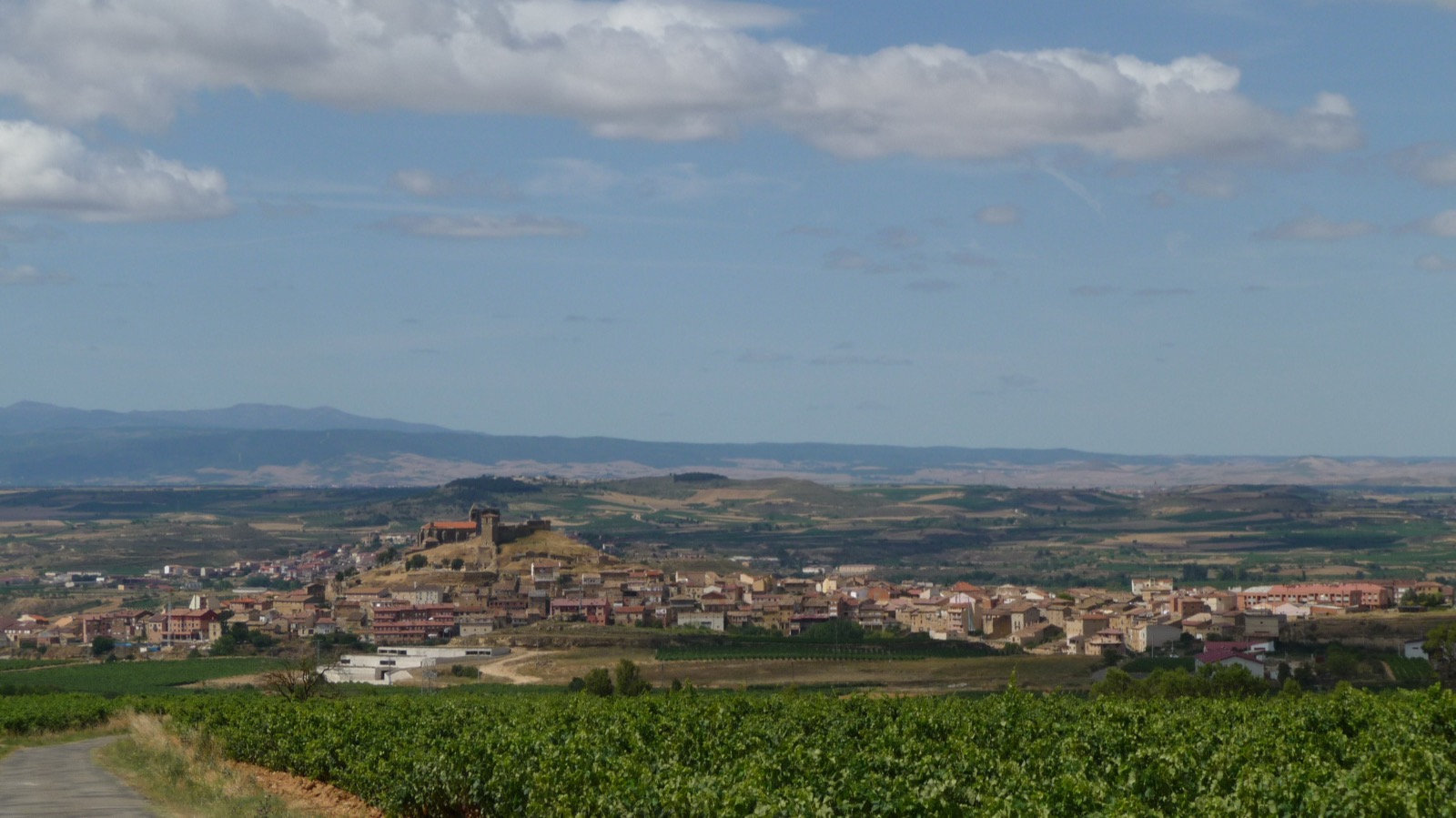
Rioja Alta (77 municipalities) is the cooler, Atlantic zone of classic long-oak-aged Tempranillo. Haro is where French négociants fleeing phylloxera built the Barrio de la Estación starting in 1877 — López de Heredia and CVNE both trace to that district. San Vicente de la Sonsierra is home to the Eguren family’s La Canoca project.
Rioja Alavesa (18 municipalities, entirely Álava/Basque Country) is smallest but densest in bodegas. Laguardia houses Artadi and Contino, the latter founded 1973 — two decades before the 1990s wave usually credited with inventing single-vineyard Rioja. Elciego is home to Marqués de Riscal, founded 1858 by a Bordeaux-exiled marqués.
Rioja Oriental (49 municipalities, La Rioja and Navarra) is the second-largest zone by area (after Rioja Alta) and still fighting its old “bulk wine” reputation from its Rioja Baja days. Alfaro is the rebuttal: Palacios Remondo’s single-vineyard Quiñón de Valmira, nearly pure Garnacha off limestone at altitude, scored 100 points from The Wine Advocate on its 2023 vintage — proof the zone’s cooler, higher sites can produce Rioja’s best wine, not just its cheapest.8
Sparkling Rioja: legal since 2017, open to everyone
This is where the seminar-room mythology runs thickest: there is no rule, quota, or cap limiting sparkling Rioja to any fixed number of producers. The pliego treats “Vino Espumoso de Calidad” as an open category — any of Rioja’s 600-plus registered bodegas can apply to make it, under the same quality controls as still wine.9
The “only three producers” idea almost certainly traces to a real but badly outdated snapshot: a December 2020 news report on the first wave of DOCa-certified sparklers to hit shelves that Christmas named exactly three wineries — Bodegas Urbina, Bodegas Bilbaínas (its Lumen bottling), and the Aldeanueva de Ebro cooperative — with Bodegas Vivanco weeks from its own launch and roughly thirty wineries already interested.9 That was six years ago. A December 2025 roundup identified twelve sparkling Riojas worth seeking for the holidays, and currently-marketed producers span all three sub-zones, including Fernández de Piérola (Alavesa), Viñedos Ruiz Jiménez’s biodynamic Osoti (Oriental), and Carlos Serres in Haro.9
The category isn’t new, either — the pliego cites an 1857 Madrid exhibition where Rioja producers showed sparkling wine made “by the Champagne method,” predating Cava. What’s new is the legal category, created by the same 7 June 2017 vote that built the single-vineyard framework.
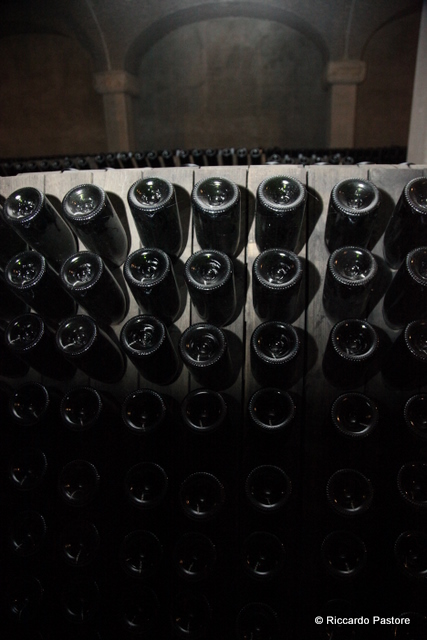
The rules: traditional method only, no Charmat/tank shortcut. Any authorized Rioja grape can go into the base wine, red or white — a blanc de noirs made entirely from Garnacha Tinta (Bilbaínas’ Lumen) is legal. Three tiers: base Espumoso de Calidad (minimum 15 months tirage-to-disgorgement), Reserva (24 months on lees), and Gran Añada (36 months, vintage-dated).9
What this means on your wine list
Look beyond the old aging ladder for a zone name (Alta, Alavesa, Oriental), a “Vino de Pueblo” seal (check “Vino de” vs. “Viñedo en” for whether the winery is actually there), “Viñedo Singular” — Rioja’s most restrictive tier — and on sparkling, “Método Tradicional” plus an aging mention (Espumoso de Calidad, Reserva, Gran Añada).
Rioja Oriental is still underpriced relative to what it can do at altitude. Palacios Remondo’s Alfaro fruit is the proof point, and there’s more high-elevation Garnacha coming from the zone’s cooler corners (Grávalos, Cervera del Río Alhama) that hasn’t caught up to its own quality yet. “Viñedo en [pueblo]” bottles are worth a look too, precisely because the winery doesn’t have to be local: that can mean an experienced producer sourcing excellent fruit from a small village without the overhead of a winery on-site.
The easiest takeaway from the whole reform is by-the-glass. Sparkling Rioja is real, legally established, made by more than a dozen producers in a genuine traditional-method style, and almost nobody’s guest has tried it. A Brut Nature Reserva by the glass costs you nothing in credibility — DOCa Rioja, traditional method, minimum 24 months on lees — and it differentiates a list otherwise running the same three Cava options as everyone else.
If you’ve been telling guests or staff that Rioja “recently allowed new grape varieties,” stop. That’s not what happened, and it undersells what did: a genuinely significant restructuring of how the region defines and protects place. That’s the real story, and it’s a better one.
Sources & Notes
DOCa Rioja Pliego de Condiciones, consolidated text through amendment AM13 (30 October 2025), §§3–4, 7–8, quoting the Consejo Regulador Pleno’s 7 June 2017 resolution; EU registration as amendment AM05, 15 February 2018. https://riojawine.com/wp-content/uploads/2025/11/pliego-de-condiciones-am13.pdf ↩︎
On the campaign to rename Rioja Baja to Rioja Oriental, led by Álvaro Palacios and Telmo Rodríguez, and the April 2018 Consejo Regulador approval: Wine Station, “Alvaro Palacios – The Story of Alvaro,” https://winestation.ie/blogs/the-wine-station/alvaro-palacios-the-story-of-alvaro (the Club Oenologique article previously cited here does not discuss the rename). ↩︎
BOE-A-2024-13649 (resolution of 27 June 2024, published 4 July 2024), approving the “Vino de”/“Viñedo en” municipio labeling split and the “Vino de Pueblo” back-label; registered at EU level as amendment AM12, 4 July 2024. https://www.boe.es/diario_boe/txt.php?id=BOE-A-2024-13649 ; https://www.decanter.com/wine-news/rioja-adopts-new-village-and-vineyard-designations-vino-de-municipio-524043/ ↩︎ ↩︎
DOCa Rioja Pliego de Condiciones, amendment AM13, §2.a.1 (minimum alcohol table), registered 30 October 2025; corroborated by public notice BOE-B-2025-29496 (13 August 2025). https://riojawine.com/wp-content/uploads/2025/11/pliego-de-condiciones-am13.pdf ↩︎ ↩︎
Orden APA/689/2008 (7 March 2008, BOE-A-2008-4991) adding Chardonnay, Sauvignon Blanc, Verdejo, Maturana Blanca, Tempranillo Blanco; Orden ARM/1372/2009 (27 May 2009, BOE-A-2009-8950) adding Maturana Tinta and Turruntés. Pliego §6 grape list unchanged across every amendment from AM07 (2019) through AM13 (2025). https://www.boe.es/diario_boe/txt.php?id=BOE-A-2008-4991 ; https://www.boe.es/diario_boe/txt.php?id=BOE-A-2009-8950 ↩︎
Consejo Regulador DOCa Rioja, 2025 Annual Report (data to 31 December 2025): 164 Viñedos Singulares, 98 titleholders, 268.31 hectares. https://riojawine.com/wp-content/uploads/2026/07/doca-rioja-memoria2025-resumenejecutivo-eng-v1.pdf ↩︎
Jorge Ordóñez Selections, San Vicente (Señorío de San Vicente), on the 1985 La Canoca planting (18 ha) by Marcos and Miguel Ángel Eguren — https://www.jorgeordonezselections.com/single-wine.php?wineID=23 — corroborated on the 1991 debut vintage by Spanish Wine Lover, https://spanishwinelover.com/winerie/senorio-de-san-vicente ↩︎
Coverage of Palacios Remondo’s Quiñón de Valmira (Alfaro, Rioja Oriental) receiving a 100-point score from The Wine Advocate on its 2023 vintage, reported February 2025. https://riojawine.com/en-us/news/parker-awards-its-coveted-100-points-to-two-rioja-wines/ ↩︎
On the open, uncapped nature of the sparkling category and its 2017 legal origin: DOCa Rioja Pliego de Condiciones, §7 (historical note) and §3.b.1 (rules), amendment AM13. On the “three producers” 2020 snapshot: Noticias de Álava, 26 December 2020, naming Bodegas Urbina, Bodegas Bilbaínas (Lumen), and the Aldeanueva de Ebro cooperative as the first wave, with roughly thirty wineries expressing interest. https://www.noticiasdealava.eus/alava/2020/12/26/espumosos-rioja-disfrutar-1148149.html — On current producer count: nuevecuatrouno.com, 19 December 2025, roundup of twelve sparkling Riojas for the holidays. https://nuevecuatrouno.com/2025/12/19/burbujas-rioja-triunfan-navidad-doce-espumosos/ ↩︎ ↩︎ ↩︎ ↩︎